Contact: Prof. J. Freudenberger
Titanium-based alloys with hight strength are required for structural applications in transportation and mobility due to their comparably low density. Furthermore, ß-Ti alloys are potential candidates for the application as implant materials. The subsequently listed activities represent our contribution to the development of Ti-based alloys with a strong focus on metal forming and the related tailoring of the microstructure.
T. Marr et al. Metals 2013, 3, 188-201
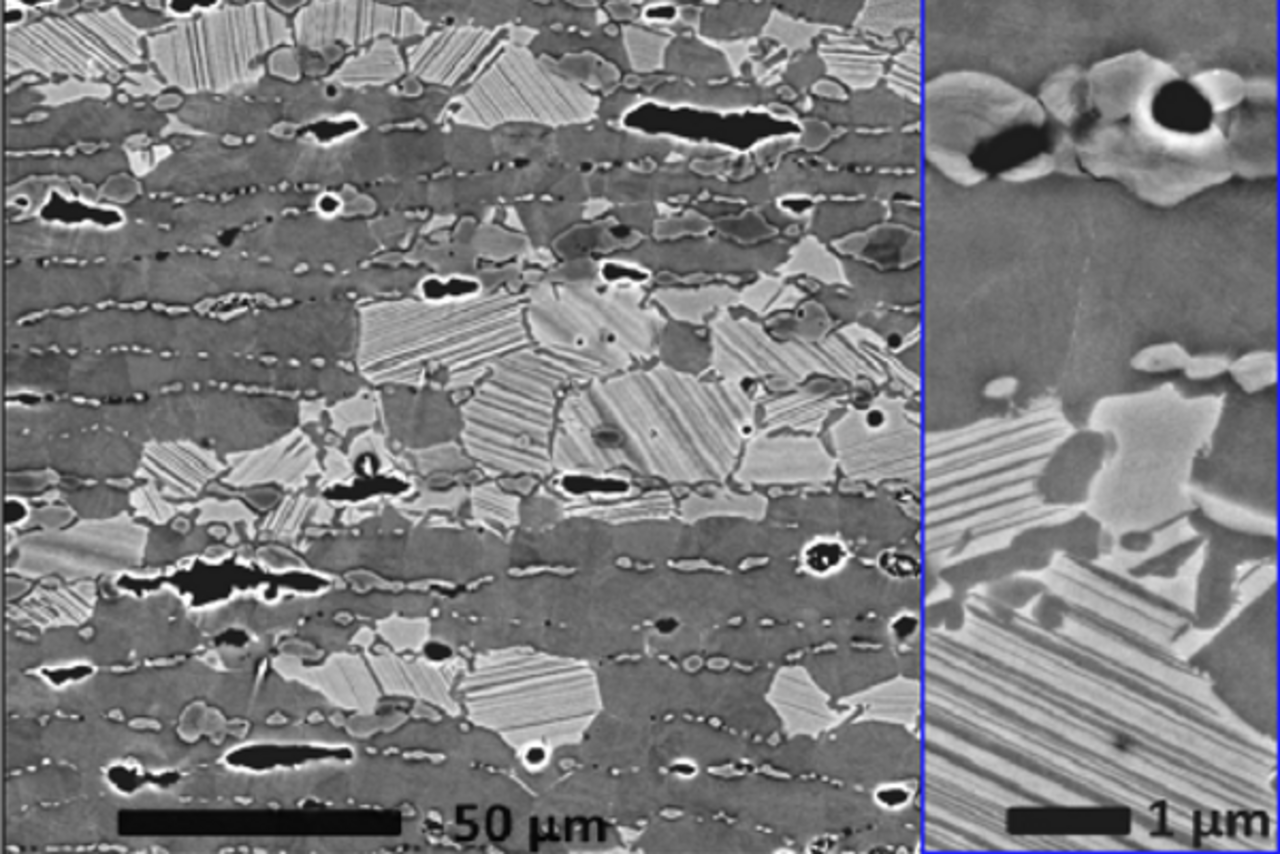
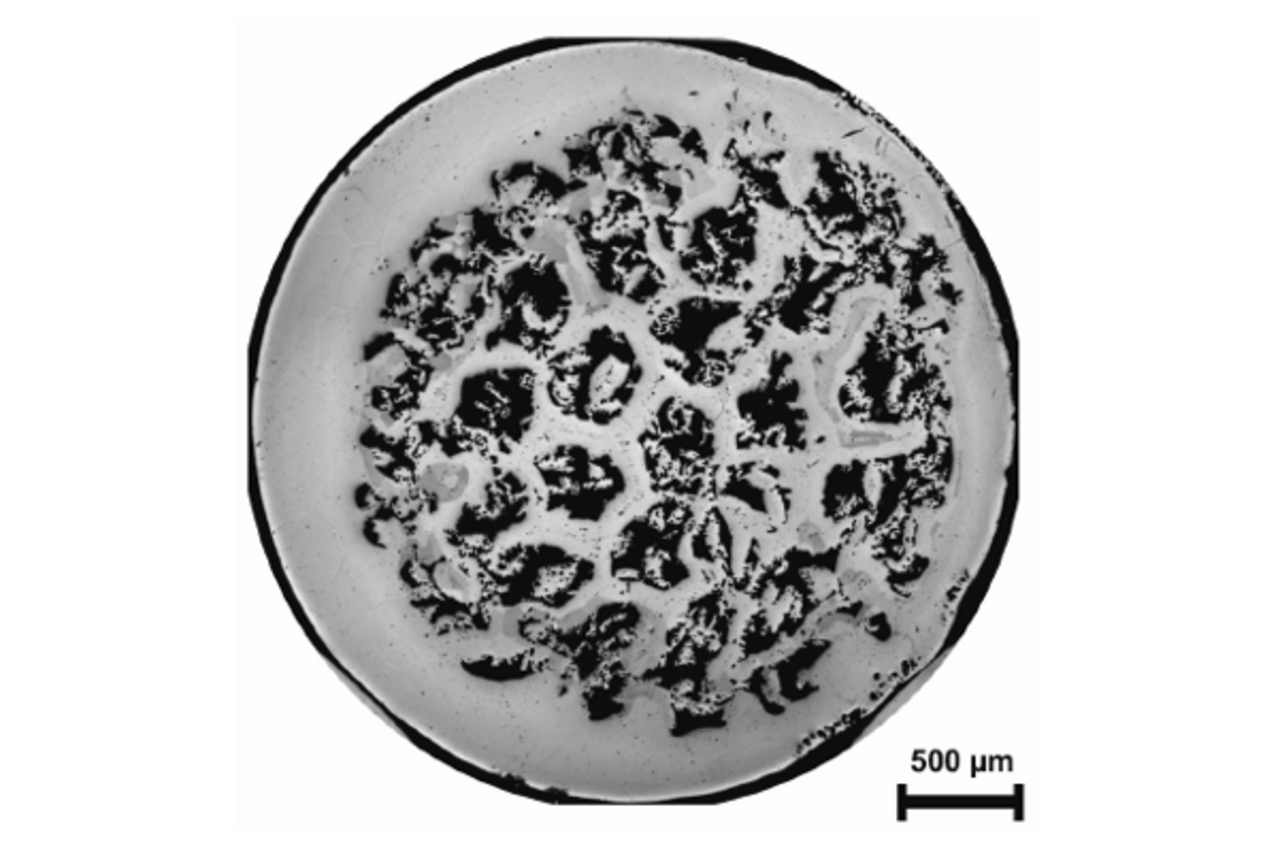
This study shows the possibility of processing titanium aluminide wires by cold deformation and annealing. An accumulative swaging and bundling technique is used to co-deform Ti and Al. Subsequently, a two step heat treatment is applied to form the desired intermetallics, which strongly depends on the ratio of Ti and Al in the final composite and therefore on the geometry of the starting composite. In a first step, the whole amount of Al is transformed to TiAl3 by Al diffusion into Ti. This involves the formation of 12% porosity. In a second step, the complete microstructure is transformed into the equilibrium state of γ-TiAl and TiAl3 . Using this approach, it is possible to obtain various kinds of gradient materials, since there is an intrinsic concentration gradient installed due to the swaging and bundling technique, but the processing of pure γ-TiAl wires is possible as well.
S. Pilz et al. Journal of the Mechanical Behavior of Biomedical Materials 79 (2018) 283–291
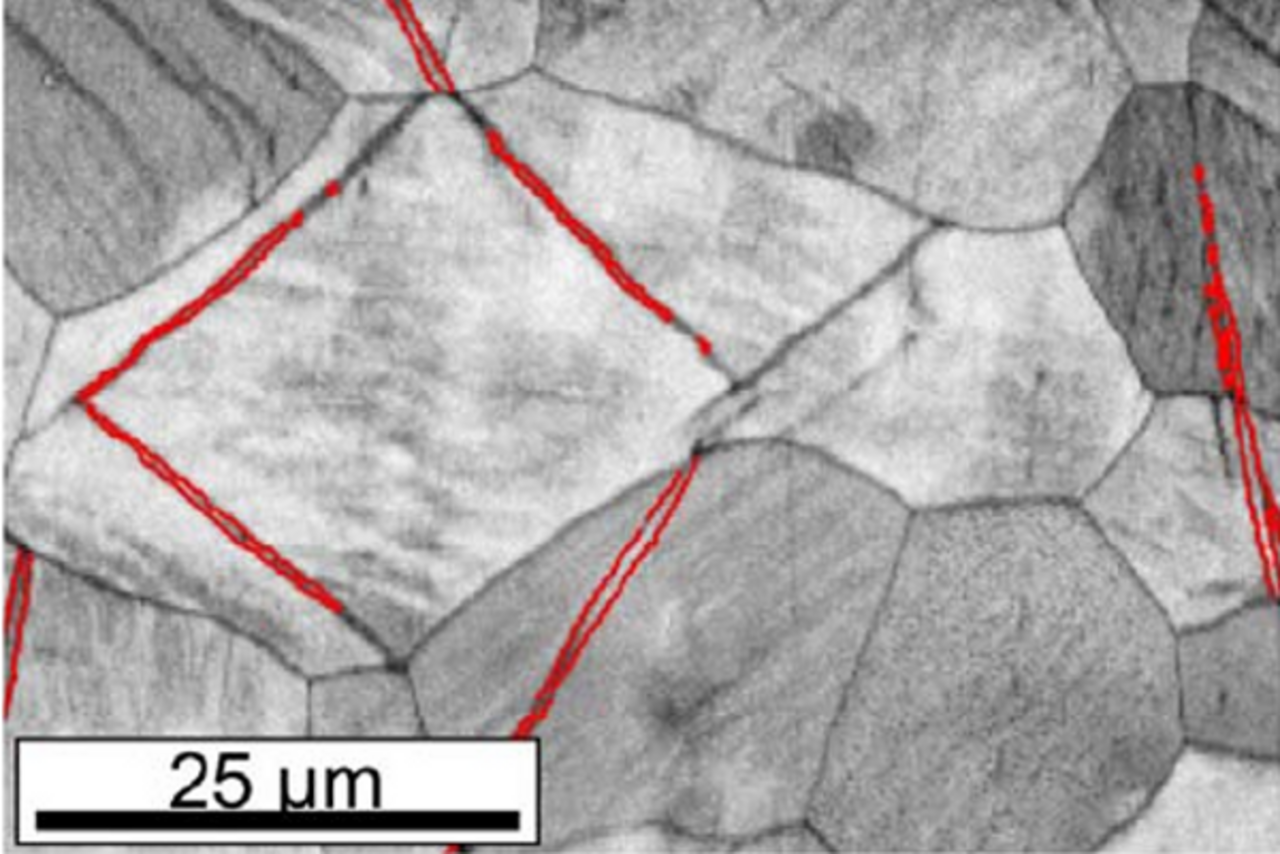
In this study, the effect of thermomechanical processing on microstructure evolution of the indium-containing β-type Ti alloys (Ti-40Nb)-3.5In and (Ti-36Nb)-3.5In was examined. Both alloys show an increased β-phase stability compared to binary alloys due to In additions. This leads to a reduced α’’-phase fraction in the solution treated and recrystallized state in the case of (Ti-36Nb)-3.5In and to the suppression of stress-induced α’’ formation and deformation twinning for (Ti-40Nb)-3.5In. The mechanical properties of the alloys were subsequently studied by quasistatic tensile tests in the recrystallized state, revealing reduced Young's modulus values of 58 GPa ((Ti-40Nb)-3.5In) and 56 GPa ((Ti-36Nb)-3.5In) compared to 60 GPa as determined for Ti-40Nb. For both In-containing alloys the ultimate tensile strength is in the range of 560 MPa. Due to the suppressed α’’ formation, (Ti-40Nb)-3.5In exhibits a linear elastic deformation behavior during tensile loading together with a low Young's modulus and is therefore promising for load-bearing implants.
A. Helth et al. Journal of the mechanical behavior of biomedical materials 65 (2017) 137–150
Different hardening strategies were evaluated regarding their potential to improve the mechanical biofunctionality of the cast and solution-treated low modulus β-Ti alloy Ti 40Nb. The strategies are based on thermomechanical treatments comprised of different hot- and cold-rolling steps, as well as annealing treatments aiming at the successive exploitation of different hardening mechanisms (grain boundary hardening, work hardening and precipitation hardening). Quasi-static tensile testing revealed that grain refinement by one order of magnitude has only a small impact on improving the mechanical biofunctionality of Ti-40Nb. However, work hardening effectively improves the tensile strength by 30% to a value of 650 MPa, while retaining Young׳s modulus at 60 GPa. The α-phase precipitation hardening was verified to have an increasing effect on both, strength and Young׳s modulus. Thereby, the change of Young׳s modulus dominates the change of the strength, even at low α-phase fractions. The pseudo-elastic behavior of Ti 40Nb is discussed under consideration of the microstructural changes due to the thermomechanical treatment. The texture changes evolving upon cold-rolling markedly influence the recrystallization behavior. However, the present results do not show a significant effect of the texture on the mechanical properties of Ti-40Nb.
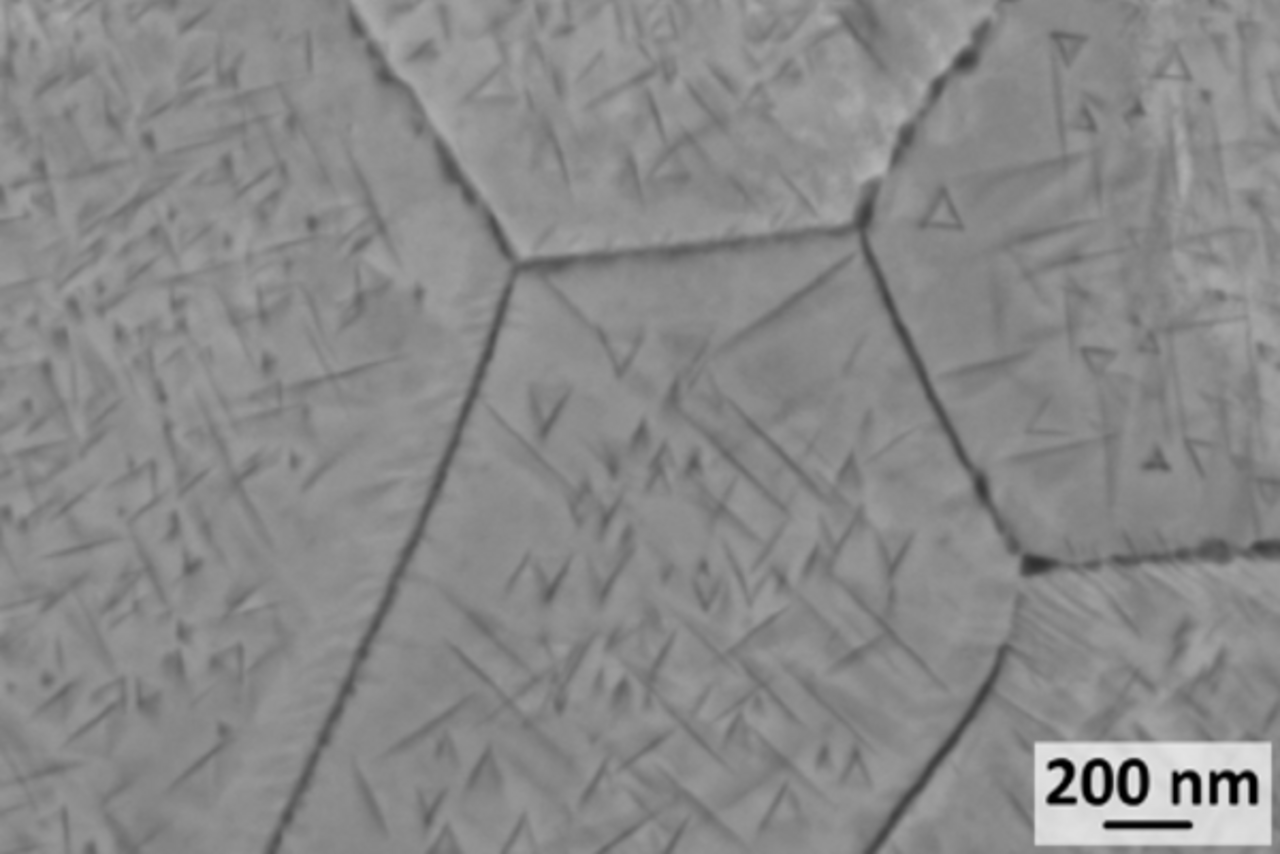
A. Helth et al. Acta Materialia 61 (2013) 3324–3334
The influence of boron additions and different oxygen contamination levels on the microstructure and the mechanical properties in the Ti66ÀxNb13Cu8Ni6.8Al6.2Bx (0 6 x 6 1) system were investigated. The alloys were prepared by levitation copper mould casting as rods with a diameter of 5 mm using different grades of starting elements. The alloy without boron exhibits a maximum compressive stress of more than 2500 MPa, associated with a compressive strain of more than 30%. The ultimate tensile stress is $1075 MPa with a maximum elongation of 1.6%. Increased oxygen content leads to a rise of yield strength due to solid solution hardening. Boron additions promote grain refinement and reinforce the interdendritic phase compound by forming needle-like TiB precipitates. This change in microstructure increases the yield stress and the Young’s modulus and lowers the plastic strain. The microstructure was analysed in terms of the boron content by means of scanning electron microscopy, Auger electron spectroscopy and transmission electron microscopy. The presented mechanical properties are compared with the compression and tensile properties of the commercially available Ti6Al4V ELI (ELI = extra low interstitial) alloy.
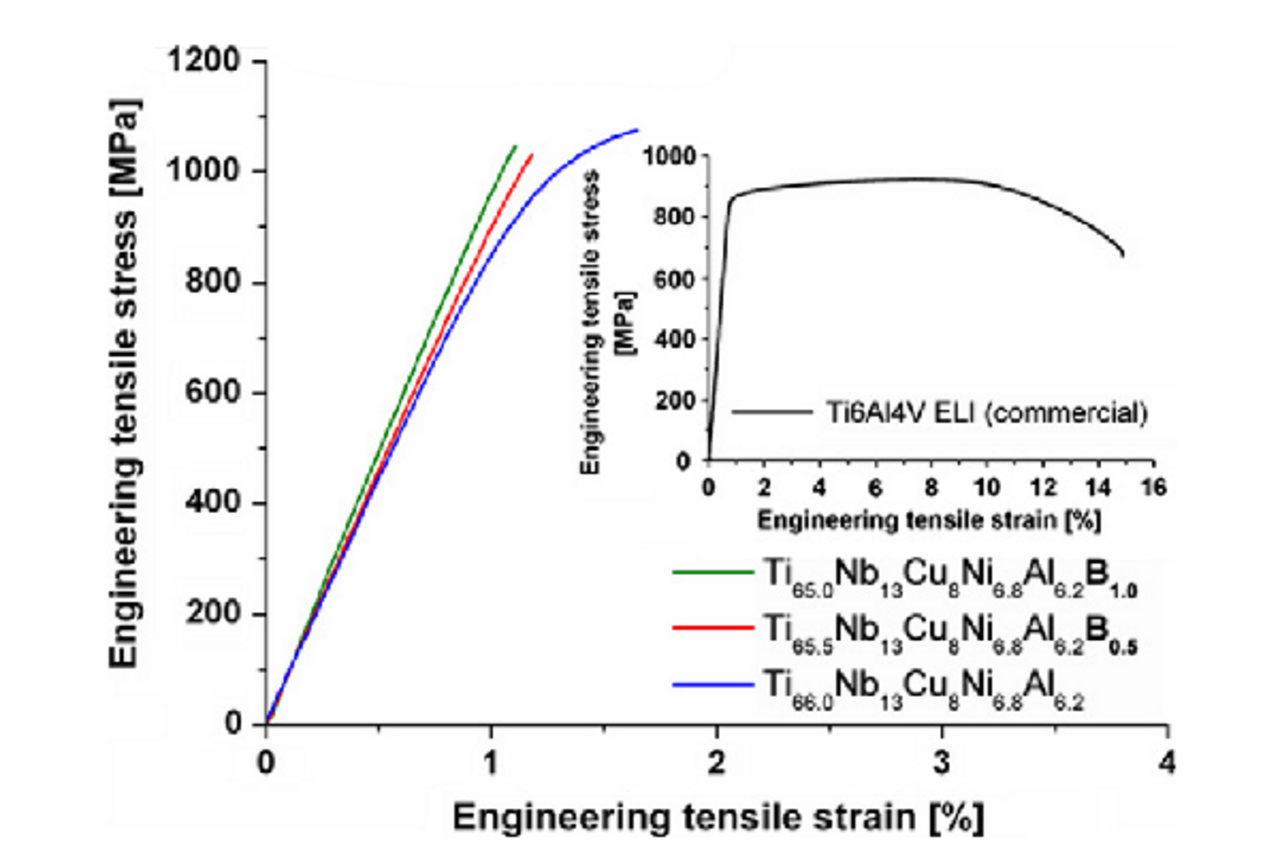
I. Okulov et al. Applied Physics Letters 104 (2014) 071905
Tensile ductility of the Ti-based composites, which consist of a b-Ti phase surrounded by ultrafine structured intermetallics, is tunable through the control of intermetallics. The two Ti-based alloys studied exhibit similar compressive yield strength (about 1000 MPa) and strain (about 35%–40%) but show a distinct difference in their tensile plasticity. The alloy Ti71.8Nb14.1Ni7.4Al6.7 fractures at the yield stress while the alloy Ti71.8Nb14.1Co7.4Al6.7 exhibits about 4.5% of tensile plastic deformation. To clarify the effect of microstructure on the deformation behavior of these alloys, tensile tests were carried out in the scanning electron microscope. It is shown that the distribution as well as the type of intermetallics affects the tensile ductility of the alloys.
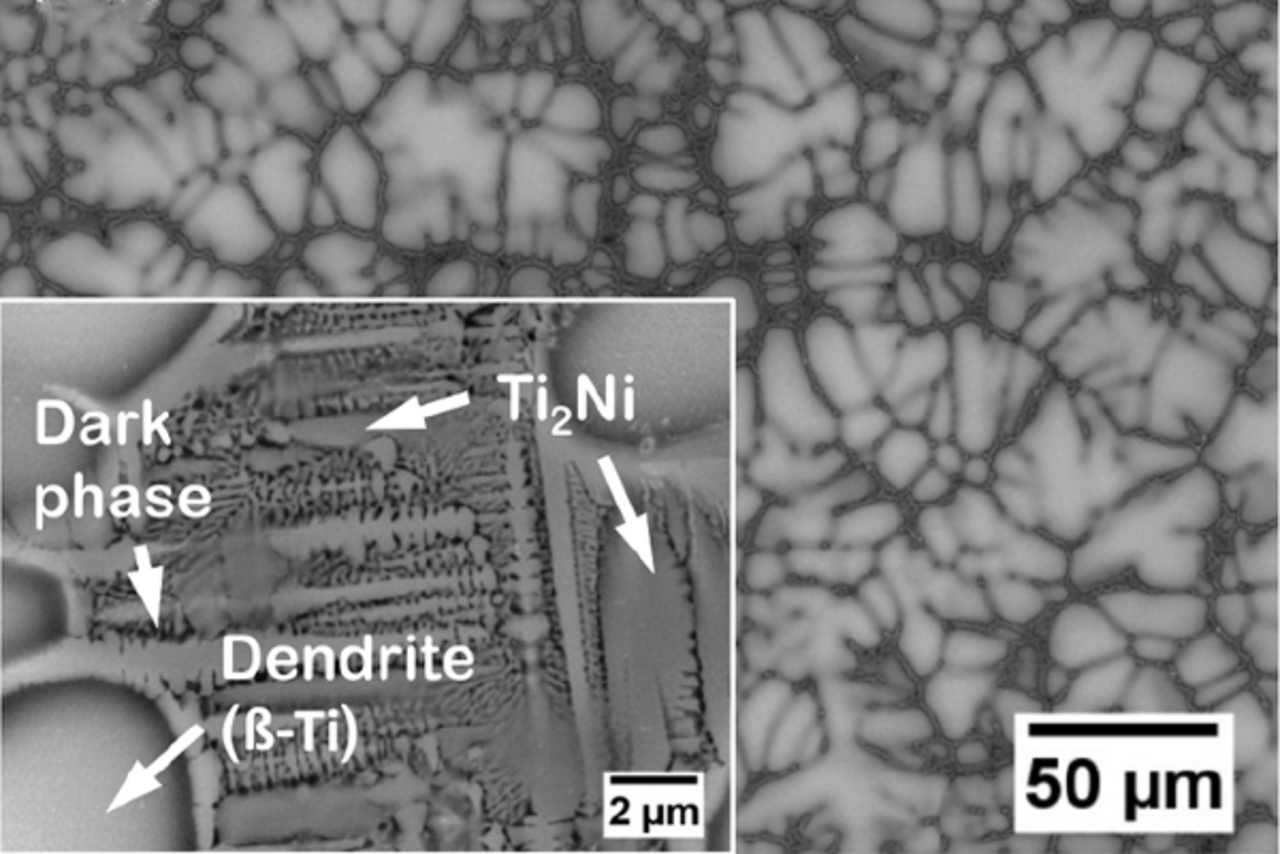
I. Okulov et al. Materials Science & Engineering A 603 (2014) 76–83
New as-cast Ti–V–Cu–Ni–Al alloys with advantageous modulus of resilience and bioperformance were developed. Their microstructure is composed of a dendritic β-Ti phase and in-situ precipitated interdendritic compounds. The tough and ductile β-Ti phase exhibits a relatively low Young's modulus. Ultrafine intermetallics effectively strengthen the alloys. The effect of microstructure on tensile plasticity was studied on strained (in-situ) and fractured (ex-situ) samples in the scanning electron microscope. It was found that the ductility depends on the volume fraction/distribution of the intermetallic phases as well as local segregation. Already in the as-cast state Ti68.8V13.6Cu6Ni5.1Al6.5 exhibits a tensile strength of about 1250 MPa and a ductility of about 4.5%.
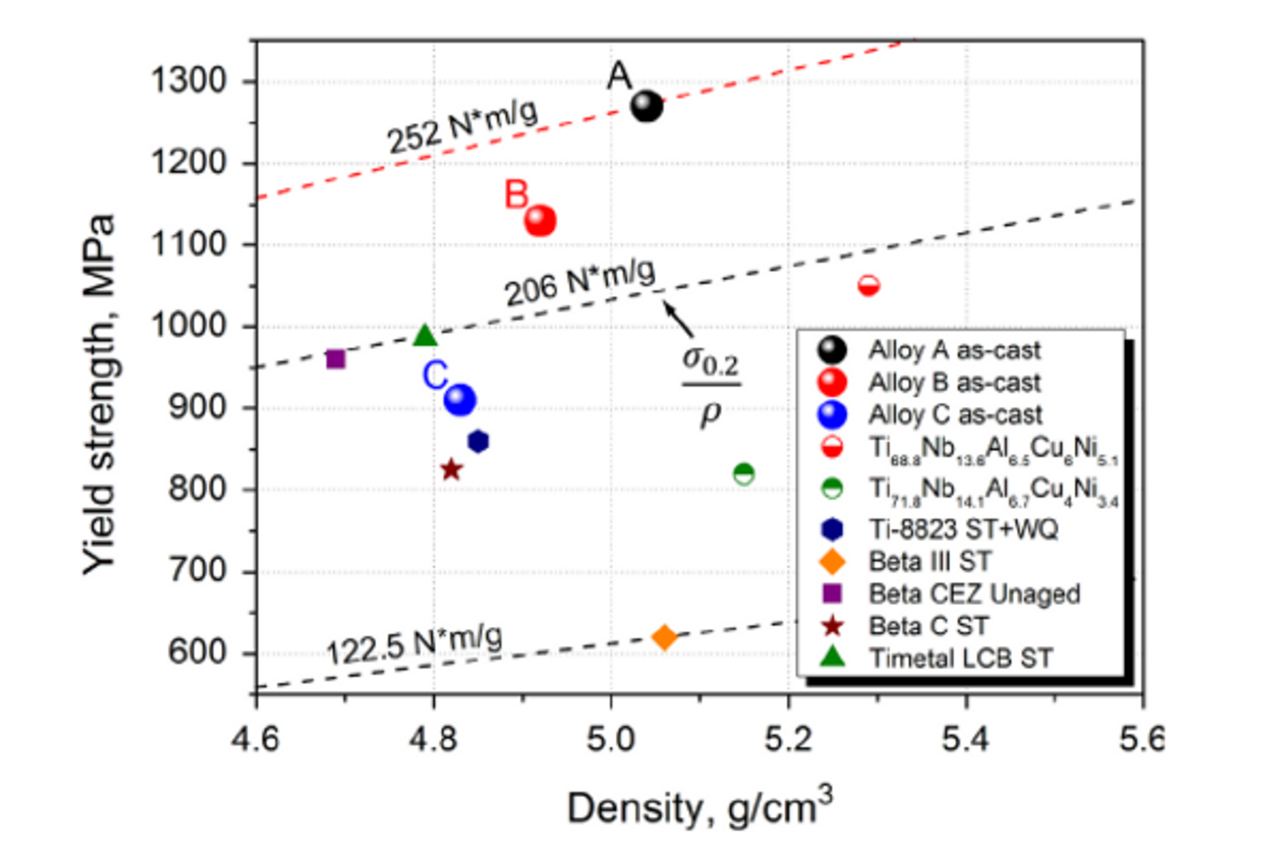
A. Pukenas et al., Materials Today Communications 30 (2022) 103083
In this study multi-layered Ti/Al sheets prepared by accumulative roll bonding (ARB) underwent a two-step heat treatment (HT) to form intermetallic compounds. The microstructure and crystal structure of the samples were examined by scanning and transmission electron microscopy as well as energy-dispersive X-ray spectroscopy and synchrotron diffraction. In the first solid-state reaction annealing step, Ti-rich ARB samples containing 60 at% Ti and 40 at% Al were held at 600 ◦ C for 12 h under a uniaxial pressure between 0 MPa and 50 MPa applied along the normal direction of the sheets. At this stage, Al is completely consumed by forming mainly Al-rich inter metallic phases and to a lower extent other titanium aluminides such as Ti3Al and TiAl. In the second step, high-temperature annealing produces TiAl and Ti3Al as major phases during both pressureless annealing at 1100 ◦ C, 1200 ◦ C and 1300 ◦ C and annealing under an uniaxial pressure of about 100 MPa at 1200 ◦ C. Pore formation during the reaction annealing can be significantly reduced by the applied pressure. As a result, a TiAl-based semi-finished material was fabricated.