
Light microscope image shows close-up of a metallic microstructure with wavy lines and elongated grains. Scale bar 200 micrometers.


Alloy Design and Processing

Prof. Dr. Julia K. Hufenbach
Head of Division


Profile

j.k.hufenbach@ifw-dresden.de
+49 (0) 351 4659 152

Prof. Dr. Jens Freudenberger
Head of Department


Profile

j.freudenberger@ifw-dresden.de
+49 (0) 351 4659 550


Research Topics

Guided by the Leibniz credo “theoria cum praxi,” our research aims to establish a continuous development chain for metallic materials used in structural, functional, and biomedical applications. Customized material design, in combination with cutting-edge manufacturing technologies – including specialized casting methods, laser-based additive manufacturing, and tailored metal-forming techniques – enables the deliberate adjustment of the mechanical, physical, and chemical properties of the metals and alloys under study. The core of this work is the deep understanding of the processing–microstructure–property relationship supported by comprehensive, scale-bridging characterization.
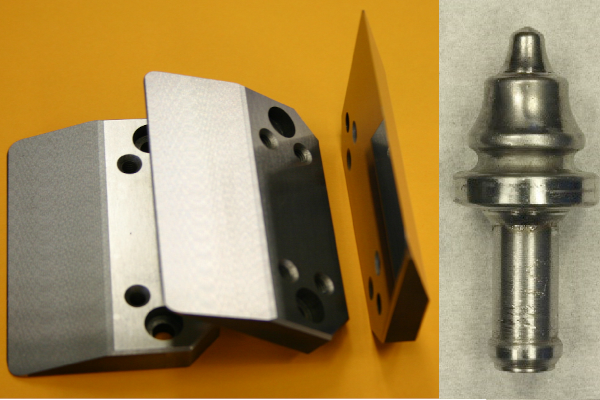
Three rectangular knives with holes on a yellow background and a cylindrical drill bit on a gray background.

Steel

Our research activities concentrate on the development and processing of novel high performance steels for cast tools, additive manufacturing and conventional welding technologies.
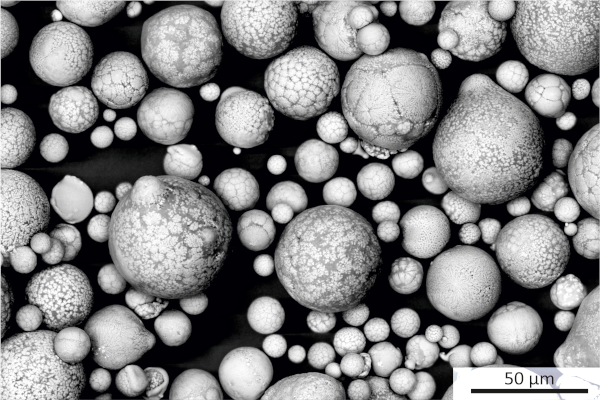
Many spherical particles of varying sizes with rough surfaces on a black background.

Aluminum Alloys

This research focuses on designing aluminum-based alloys combining tailored properties with enhanced processability by laser powder bed fusion or bonding processes.
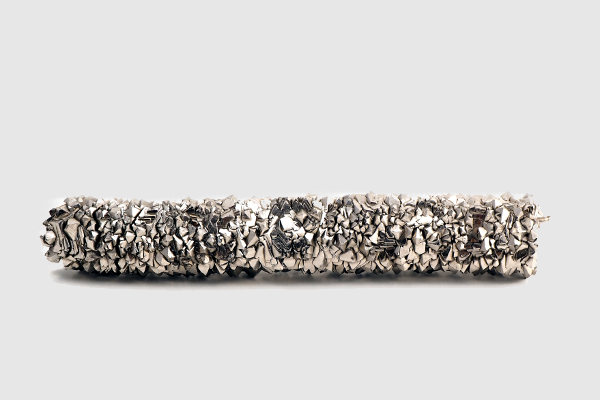
Elongated object with irregular, knobby surface on light background.

Titanium Alloys

Ti alloys with high strength-to-density ratio and low stiffness are conventionally prepared and generated by additive manufacturing. TiAl wires are developed for repair welding.
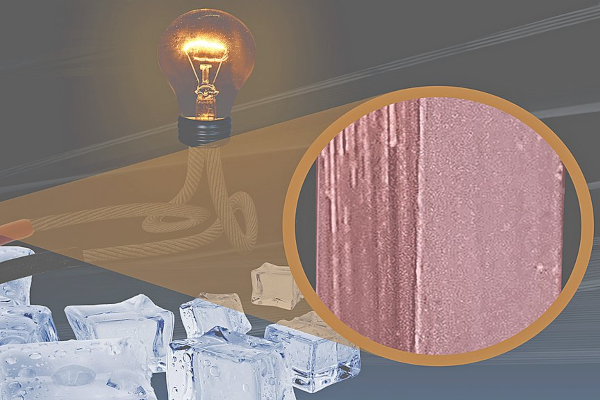
Graphic illustrating thermoelectric concepts: a glowing light bulb above a hot/cold gradient with ice cubes at the bottom and a circular close-up of a metallic or crystalline microstructure on the right.

Copper Alloys

We apply laser-based additive manufacturing processes to thermoelectric Cu-Ni alloys and generators and we have long-time experience with high-strength conductors.
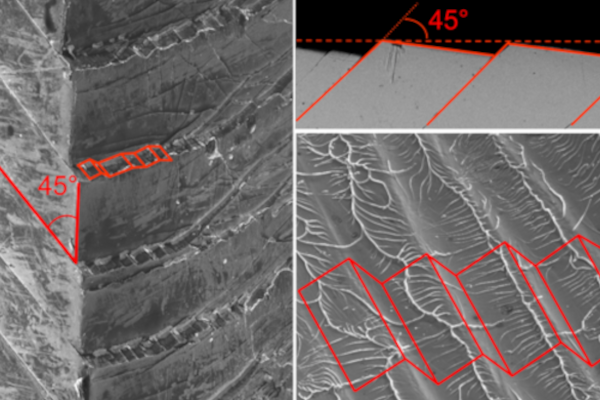
Three scanning electron microscope images of surface structures with marked 45-degree angles and highlighted rectangular areas for analyzing deformation mechanisms in bulk metallic glasses.

Bulk Metallic Glasses

Synthesis, properties and deformation mechanism are the focus of our research on bulk metallic glasses (BMGs).
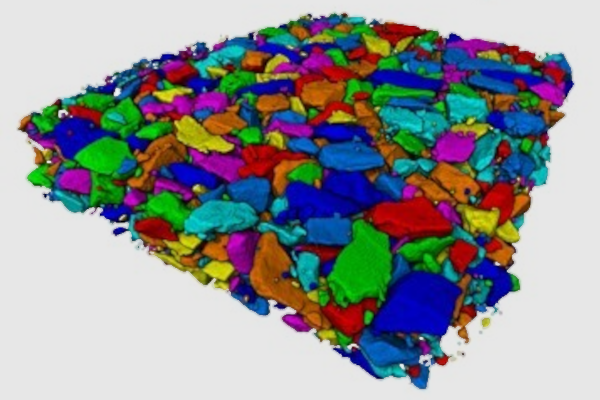
A three-dimensional representation of a heterogeneous, granular material containing coloured particles of varying sizes, illustrating the microstructure of a magnetocaloric material.

Magnetocaloric Materials

We prepare and tune the properties of magnetocaloric materials.
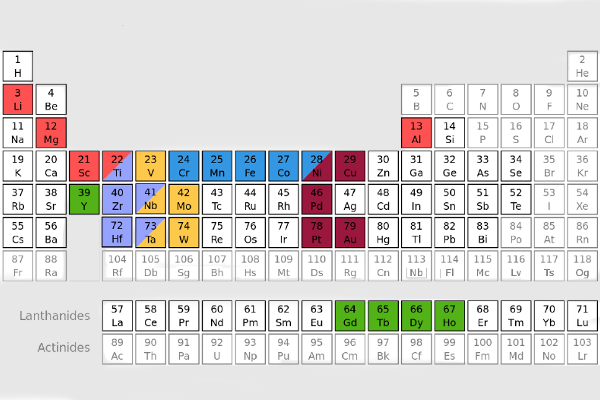
Periodic table with elements highlighted in red, blue, green, and yellow indicating different groups or categories.

High Entropy Alloys

We investigate e.g. solid solution strengthening in HEAs with deliberately adjusted composition in wide concentration ranges.
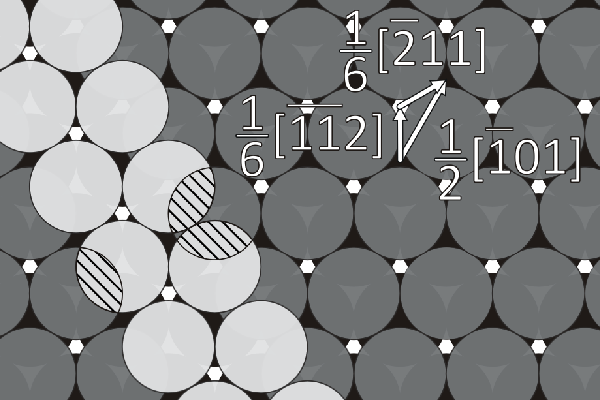
Graphic representation of spherical metal atoms in close-packed arrangement with overlaid vectors and segments illustrating dislocation movements in metals.

Plasticity in Metals

We investigate the deformation mechanisms of metals.
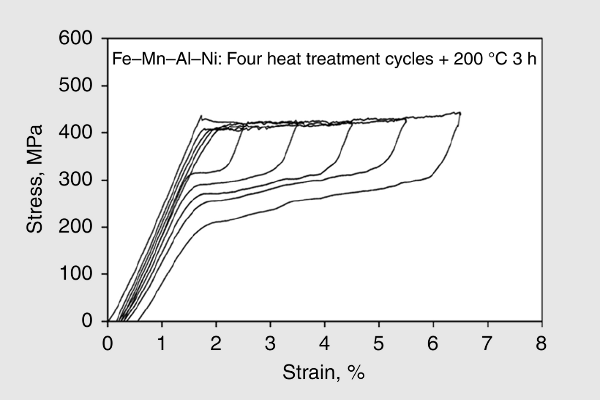
Graph showing stress-strain curves of Fe-Mn-Al-Ni alloy material over four heat treatment cycles at 200 °C for 3 hours.

Shape Memory Alloys

We investigate structure, property and processing issues of  Fe-, Cu- and pseudoelastic Au-based SMAs.
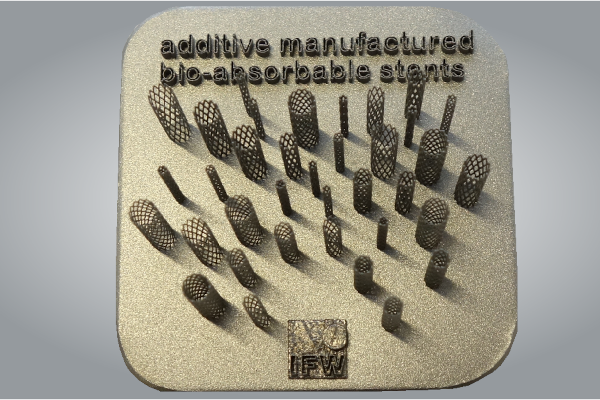
Metal plate with multiple additively manufactured bio-absorbable stents in various shapes and sizes with the text 'additive manufactured bio-absorbable stents' and the 'IFW' logo.

Biodegradable Alloys

This research topic encompasses the development of novel biodegradable Fe-based alloys, tailored processes as well as coatings for implant applications.
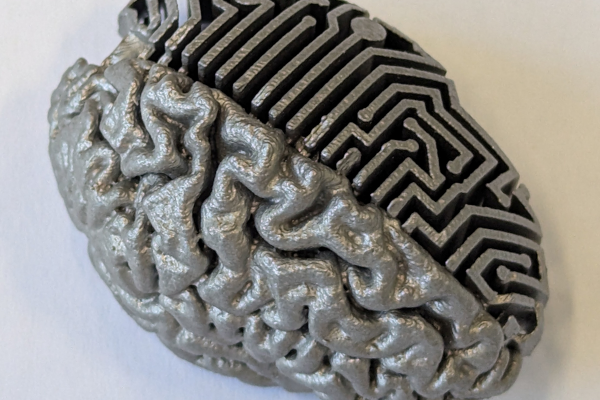
Metallic 3D-printed brain model showing one half with realistic cerebral gyri and the other half with an abstract maze-like geometric pattern.

Machine Learning for Materials Design

Machine learning is leveraged for intelligent control and real-time defect monitoring in process such as additive manufacturing and hot wire drawing.
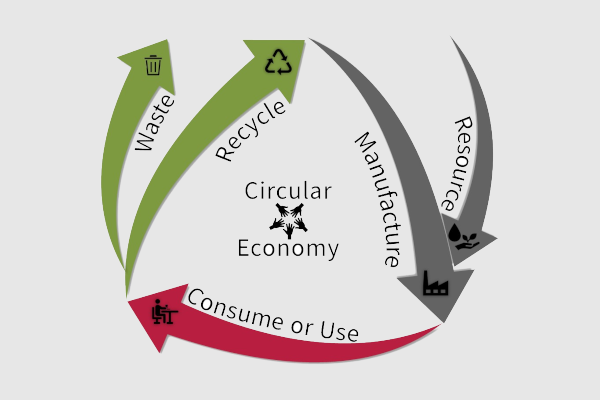
Diagram with arrows showing the flow from resource to manufacture, consume or use, recycle, and waste, with the text 'Circular Economy' in the center.

Circular Economy Aspects

Our research contributes to the scientific understanding and practical implementation of circular economy concepts in industry and society.