The Surface-Functionalized Materials Group, led by Dr. Amin Bahrami, specializes in the atomic-scale modification, functionalization, and protection of advanced materials using Atomic Layer Deposition (ALD). By exploiting the unique capabilities of ALD, including angstrom-level thickness control, exceptional conformality, precise composition tuning, and superior control over surface reactions, the group develops innovative surface and interface engineering strategies for next-generation technologies. The team's research covers a broad spectrum of functional materials, including energy materials such as thermoelectric materials and active components for metal-ion batteries, biomaterials, textiles, catalysts, and advanced electronic materials. A major focus is the development of novel ALD processes for challenging material systems, including elemental metals (e.g., Bi, Cu, Sb), semiconductors, two-dimensional materials, complex oxides, and multifunctional nanostructures, enabling new opportunities in energy conversion, energy storage, electronics, and sustainable technologies.
Beyond conventional surface coatings, the group utilizes the outstanding conformality and scalability of ALD to functionalize complex three-dimensional structures, including powders, porous materials, biomedical implants, and electronic components. These capabilities enable the design of advanced protective layers, tailored interfaces, and multifunctional coatings that enhance material performance, stability, and lifetime. A unique strength of the group is its expertise in designing, developing, and customizing ALD systems and reactors according to specific research and application requirements. By combining deep knowledge of ALD chemistry, process engineering, and reactor technology, the team can create tailored deposition platforms for challenging materials, unconventional substrates, powder processing, and emerging applications where standard commercial ALD solutions are insufficient.
In addition to ALD-based approaches, the group explores emerging surface engineering technologies, including spark ablation-based nanoparticle deposition, enabling direct printing of nanoparticles onto a wide variety of substrates without the need for conventional lithography, patterning, or masking processes. This approach opens new pathways for scalable fabrication of functional surfaces, hybrid material architectures, and next-generation device concepts.
The Surface-Functionalized Materials Group welcomes collaborations with academic and industrial partners interested in developing customized ALD processes, advanced thin-film coatings, functional surfaces, and tailor-made ALD technologies. Whether the challenge involves a new material, a specific compound, a complex substrate, or a customized deposition solution, the group is open to exploring innovative approaches based on atomic-scale engineering.
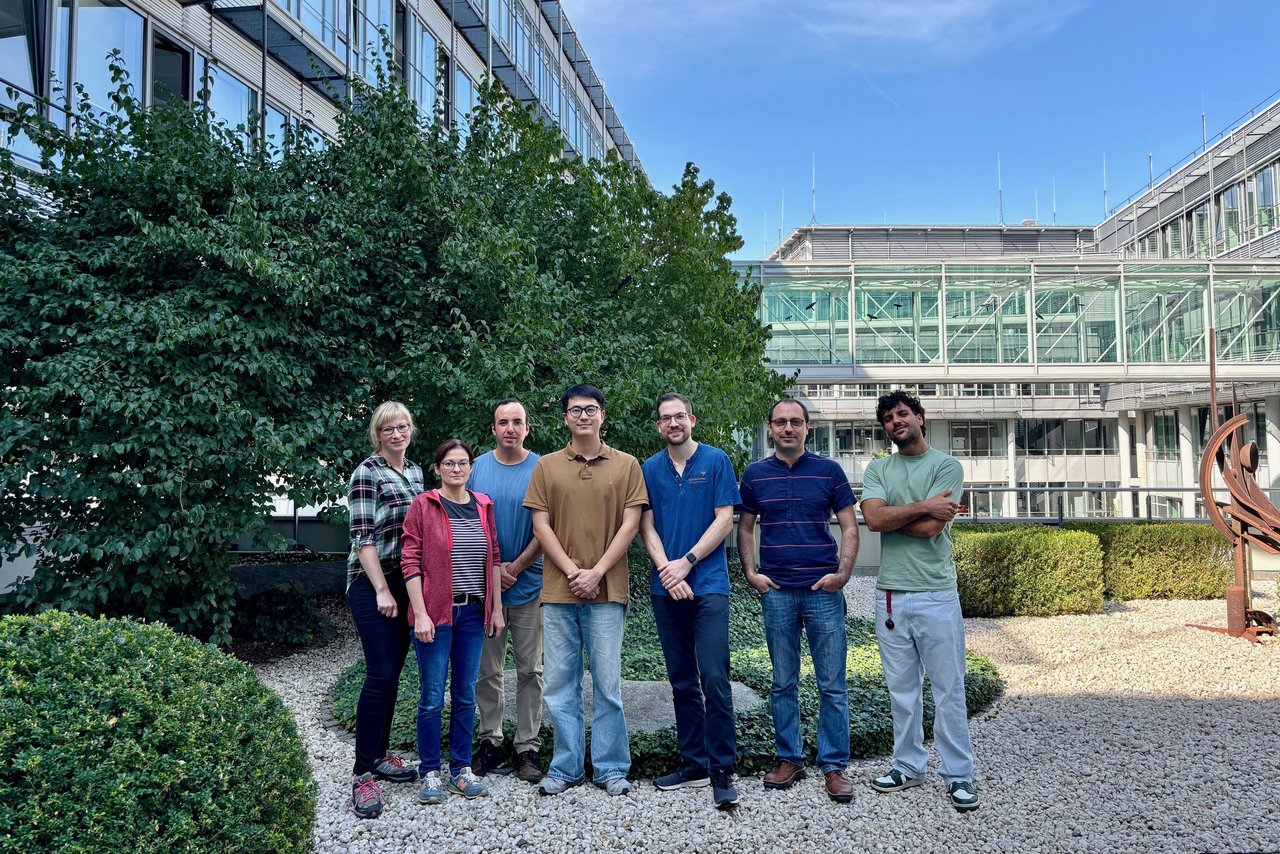
Head of Research Group "Surface-Functionalized Materials "
Room: D 1E.10
Phone: +49 351 4659 664
Postdocs:
Dr. Jorge Luis Vazquez‐Arce
Dr. Alejandra Ruiz de Clavijo Garcia-Serrano
Ph.D. Students:
Jun Li
Abhishek Pandey
Keqiang Pan
Previous members:
Mr. Alessio Amoroso (MSc Thesis- Università di Napoli Federico II, Italy, Erasmus scholarship)
Ms. Ying Lu (Master Thesis, TU Chemnitz)
Mr. Niels Stolzenburg (BSc Thesis, Hochschule für Technik und Wirtschaft-Dresden)
Ms. Moriom Akter (Research stay, TU Dresden)
Mr. Augustin Meudec (Internship, École nationale supérieure d'ingénieurs de Caen, Erasmus scholarship)
A Bahrami, G Schierning, K Nielsch, Advanced Energy Materials 10 (19), 1904159 (2020)
Thermoelectric (TE) technology enables the efficient conversion of waste heat generated in homes, transport, and industry into promptly accessible electrical energy. Such technology is thus finding increasing applications given the focus on alternative sources of energy. However, the synthesis of TE materials relies on costly and scarce elements, which are also environmentally damaging to extract. Moreover, spent TE modules lead to a waste of resources and cause severe pollution. To address these issues, many laboratory studies have explored the synthesis of TE materials using wastes and the recovery of scarce elements from spent modules, e.g., utilization of Si slurry as starting materials, development of biodegradable TE papers, and bacterial recovery and recycling of tellurium from spent TE modules. Yet, the outcomes of such work have not triggered sustainable industrial practices to the extent needed. This paper provides a systematic overview of the state of the art with a view to uncovering the opportunities and challenges for expanded application. Based on this overview, it explores a framework for synthesizing TE materials from waste sources with efficiencies comparable to those made from raw materials.
S. He, J. Li, A. Bahrami, K. Nielsch, et al. Science Advances 12 (27), eaeg3850(2026). DOI:10.1126/sciadv.aeg3850
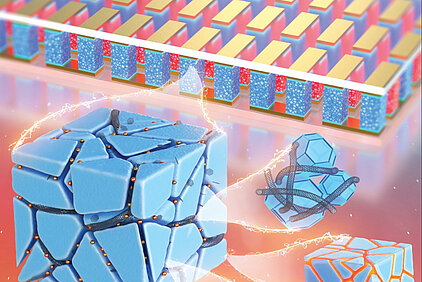
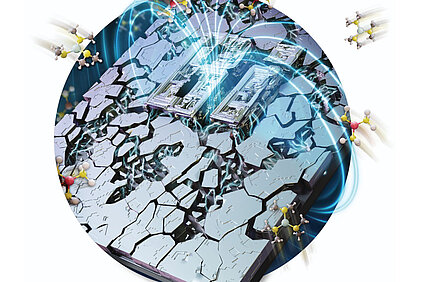
Metal ion migration under operational gradients triggers irreversible decomposition and performance collapse in thermoelectric (TE) materials. β-Zn4Sb3 has high TE performance but suffers from severe zinc (Zn) ion migration under an external field. This work uses powder atomic layer deposition (pALD) to engineer atomic-scale zinc oxide (ZnO) interfaces that simultaneously suppress Zn ion migration and enhance phonon scattering. Through precise ZnO coatings (50 to 200 cycles), we create continuous barriers that immobilize interstitial Zn ions, eliminating Zn motion and inhibiting phase decomposition. Optimized 100 ALD cycle coatings reduce lattice thermal conductivity by >20% through intensified boundary-phonon scattering, yielding a stabilized, nondegrading figure of merit compared to uncoated performance. Crucially, the thermal stability of 100-ALD-cycle-coated sample persists through 39,260 thermal cycles under gradients of 220 kelvin, and Seebeck coefficient mapping exhibits a uniform distribution along temperature difference. Our approach establishes pALD as a promising atomic-level interface design in migration-prone TE materials, bridging high performance with long-term operational reliability.
JL Vazquez‐Arce, K. Nielsch, A Bahrami, et al. Advanced Energy Materials 16 (7), e02982 (2026). https://doi.org/10.1002/aenm.202502982
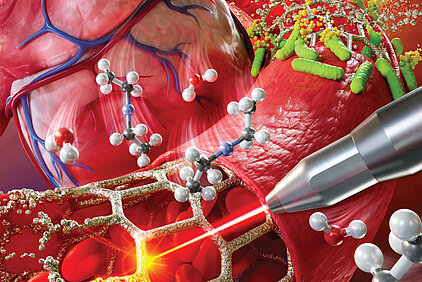
This review critically examines recent progress in thermoelectric thin films synthesized by atomic layer deposition (ALD), with emphasis on their transport properties, growth strategies, and challenges. Chalcogenide thin films are discussed as the most direct analogs of conventional bulk thermoelectric materials, where ALD enables precise tuning of thickness, crystallinity, and carrier concentration, allowing comparative evaluation against conventional thin film deposition methods. Doped oxides and ternary oxides, particularly ZnO-based systems with Al, Ga, or transition-metal dopants, are highlighted as another important class, combining high-temperature stability with tunable electronic transport, albeit with lower power factors than chalcogenides. Recent advances in molecular layer deposition have allowed the implementation of ALD/MLD multilayers and superlattices, showing how interface engineering and nanoscale modulation of potential barriers can influence carrier scattering and phonon transport. In parallel, we review precursor chemistry, deposition temperature windows, and process limitations, including environmental and safety considerations, to provide practical guidance for reproducibility and scalability. A comparative analysis with results from other deposition methods underlines that while ALD does not intrinsically outperform other deposition techniques, it offers complementary advantages in conformality and sub-nanometer composition control, making it a powerful option for complex device architectures. Altogether, the review situates ALD-grown thin films within the broader thermoelectric landscape, highlighting both their potential and the critical bottlenecks that remain.
J.L. Vazquez Arce, A. Bahrami, K. Nielsch, et al. Angewandte Chemie 64 (15), e202422578 (2025)
doi.org/10.1002/anie.202422578
This study presents the first successful demonstration of growing elemental bismuth (Bi) thin films via thermal atomic layer deposition (ALD) using Bi(NMe2)3 as the precursor and Sb(SiMe3)3 as the co-reactant. The films were deposited at a relatively low temperature of 100 °C, with a growth per cycle (GPC) of 0.31–0.34 Å/cycle. Island formation marked the initial growth stages, with surface coverage reaching around 80 % after 1000 cycles and full coverage between 2000 and 2500 cycles. Morphological analysis revealed that the Bi grains expanded and became more defined as the number of ALD cycles increased. This coalescence is further supported by X-ray diffraction (XRD) patterns, which show a preferential shift in growth orientation from the (012) plane to the (003) plane as the film thickness increases. X-ray photoemission spectroscopy (XPS) confirmed the presence of metallic Bi with minimal surface oxidation. Temperature-dependent sheet resistance measurements highlight the semimetallic nature of Bi, with a room temperature resistivity of ≈200 μΩcm for the 2500 cycles Bi. Temperature-dependent sheet resistance was also associated with a transition in carrier-type dominance from holes at higher temperatures to electrones at lower temperatures.
Interface Engineering of Thermoelectric Materials Through Powder Atomic Layer Deposition (DFG research grant)
Amin Bahrami (BA 8109/1-1), since 2023
AERosol Injection Source for chemical thin film deposition (Saxon State Ministry for Economic Affairs, Labour, and Transport (SMWA))
Amin Bahrami, Since 2026