

Indo-German collaboration in Quantum Science traces back to the pivotal interaction between Albert Einstein and S. N. Bose that gave rise to Bose-Einstein statistics. This workshop, jointly organized by the S.N. Bose National Center for Basic Sciences and the Leibniz Institute for Solid State and Materials Research Dresden aims to strengthen Indo-German cooperation in the development of advanced materials for quantum sensing technologies. Particular focus areas include present quantum sensing technologies and the exploration of novel magnetic and topological materials for quantum sensing. Bringing together researchers and industry experts, the event fosters knowledge exchange, joint projects and integration of future materials and devices. the workshop aligns with India's National Quantum Mission and the Quantum Technologies Conceptual Framework of the German government, fostering innovation, training and long-term partnerships.
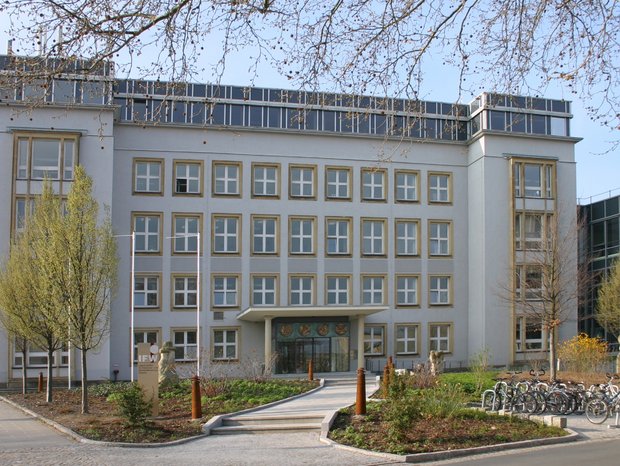
IFW Dresden, Lecture Hall (A1E.10) on 30 June, Room D2E.27 on July 1-3
Helmholtzstrasse 20
01069 Dresden
Access with public transportation:
Bus 85 Stop “Helmholtzstrasse”
Tramway 3,8 Stop “Nürnberger Platz”
Bus 66 Stop “Mommsenstrasse”
Milan Allan, Ludwig-Maximilians-Universität München & alqem GmbH (Munich)
Nabeel Aslam, Leipzig University
Christian Ast, Max-Planck-Institut für Festkörperforschung
Anjan Barman, S. N. Bose National Centre for Basic Sciences
Subhankar Bedanta, NISER Bhubaneswar
Vladimir Dyakonov, Julius Maximilian University of Würzburg
Philipp Gegenwart, Universität Augsburg
Christian Hemker-Hess, Bergische Universität Wuppertal
Mallikarjun Karra, Qubeats (Hyderabad)
Rüdiger Klingeler, Heidelberg University
T.S. Mahesh, IISER Pune
Tuhin Maity, IISER Thiruvananthapuram
Gayathri H.N. Murthy, Quan2D Technologies (Bengaluru)
Elke Neu-Ruffing, RPTU Kaiserslautern Landau
Christian Osterkamp, Diatope GmbH (Ulm)
Pratap Raychaudhuri, Tata Institute of Fundamental Research
Friedemann Reinhard, University of Rostock
Kasturi Saha, Indian Institute of Technology Bombay
Tanusri Saha-Dasgupta, S.N. Bose National Centre for Basic Sciences
Chandan Samanta, IISER Bhopal
Prasenjit Sen, Harish-Chandra Research Institute
Saquib Shamim, S.N. Bose National Centre for Basic Sciences
Goutam Sheet, IISER Mohali
Aparajita Singha, Technische Universität Dresden
Jeroen van den Brink, IFW Dresden
Organizers: Bernd Büchner (IFW Dresden) and Tanusri Saha-Dasgupta (SNBNCBS)
Co-Organizers: Aparajita Singha (TU Dresden) and Saquib Shamimb (SNBNCBS)
Registration from 8:30
09:00 Session 1 - Workshop Opening
Opening words
Bernd Büchner, Scientific Director, IFW Dresden
Gerhard Rödel, Head Office Manager, DRESDEN-concept
Sohag Sen, First Secretary (Commerce), Embassy of India
Kusumita Arora, Director, Indo-German Science and Technology Center
Opening Lecture
Designing 2D materials with novel quantum functionality by computation
Tanusri Saha-Dasgupta, Director, S.N. Bose National Centre for Basic Sciences, Kolkata
10:30 Get together with posters & coffee
11:00 Session 2 - Quantum materials
From Properties to Structures: DiffCrysGen as a Lightweight and Efficient Conditional Diffusion Model for AI-Driven
Inverse Materials Design
Prasenjit Sen, Harish-Chandra Research Institute, Allahabad
Topological surface superconductivity in PtBi2
Jeroen van den Brink, IFW Dresden
Unconventional Surface Superconductivity of t-PtBi2
Christian Hemker-Hess, Bergische Universität Wuppertal
13:00 Lunch break
14:00 Session 3 - Quantum Materials
Spins and orbitals in the 2D Ising magnet Li2FeSiO4
Rüdiger Klingeler, Heidelberg University
Strain-induced Orbital Ordered Ferromagnetic State and Enhanced Magnetoresistance in Pr0.67Sr0.33MnO3
Tuhin Subhra Maity, Indian Institute of Science Education and Research Thiruvananthapuram
Utilizing frustrated magnets for milli-Kelvin refrigeration and a Quantum NanoLab
Philipp Gegenwart, Universität Augsburg
16:00 Coffee break
16:30 Discussion panel (closed session, only invited speakers)
17:30 End of the day's programme
09:00 Session 4 - Quantum Sensing: Present Technologies
Quantum sensing and imaging with NV centers in diamond
Kasturi Saha, Indian Institue of Technology Bombay
Spin pumping with novel quantum material
Subhankar Bedanta, National Institute of Science Education and Research Bhubaneswar
Spin qubits in diamond for quantum sensing
Nabeel Aslam, Leipzig University
11:00 Coffee break
11:30 Session 5 - Quantum Materials
Visualising vortex liquids and inverse melting in superconducting thin films
Pratap Raychaudhuri, Tata Institute of Fundamental Research, Mumbai
Tuning the Uncertainty between Charge and Phase: From Dynamical Coulomb Blockade to Dissipationless Cooper Pair
Tunneling
Christian Ast, Max Planck Institute for Solid State Research, Stuttgart
12:50 Lunch
14:00 Session 6 - Quantum Materials
What limits the critical temperature for superconductivity in quantum materials
Milan Allan, Ludwig-Maximilians-Universität München
Nucleation and Enhancement of Superconductivity Under Tip-induced Strain fields
Goutam Sheet, Indian Institute of Science Education and Research Mohali
Sensing vortex correlations using Noise
Saquib Shamim, S.N. Bose National Centre for Basic Sciences, Kolkata
16:00 Coffee break
16:30 Discussion panel (closed session, only invited speakers)
17:30 End of the day's programme
09:00 Session 7 - Quantum Sensing: Search for Alternatives
Entanglement-Assisted Quantum Sensing with Correlated Nuclear Spin Clusters
T.S. Mahesh, Indian Institute of Science Education and Research Pune
Localization and coherent control of 25 nuclear spins in Silicon Carbide
Vadim Vorobyov, University of Stuttgart
Planar scanning probe microscopy - the art of low-level flight at the nanoscale
Friedemann Reinhard, University of Rostock
11:00 Coffee break
11:30 Session 8 - Quantum Sensing: Search for Alternatives
Spin-based quantum sensing: from material science and physics, to applications in biology and chemistry
Elke Neu-Ruffing, RPTU Kaiserslautern-Landau
Counting photons with all-2D hybrids
Arindam Ghosh, Indian Institute of Science, Bengaluru
12:50 Lunch
14:00 Session 9 - Quantum Sensing: Search for Alternatives
Spin Defects in hexagonal Boron Nitride for Sensing Applications
Vladimir Dyakonov, Julius Maximilian University of Würzburg
NV-magnetometry: Challenges and Opportunities for Quantum Sensing Experiments
Aparajita Singha, Technische Universität Dresden
Nonlinear nanomechanical resonators approaching the quantum ground state
Chandan Samanta, Indian Institute of Science Education and Research Bhopal
16:00 Coffee break
16:30 Discussion panel (closed session, only invited speakers)
17:30 End of session
09:00 Session 10 - Bridging the gap between academia and industry
Allen Milan, Alqem GmbH (Munich)
Christian Osterkamp, Diatope Gmbh (Ulm)
Gayathri H. N. Murthy, Quan2D Technologies (Bengaluru)
Mallikarjun Karra, Nostradamus Technologies Private Limited (Hyderabad)
10:30 Coffee break
11:00 Final discussion panel (closed session, only invited speakers)
12:30 End of workshop
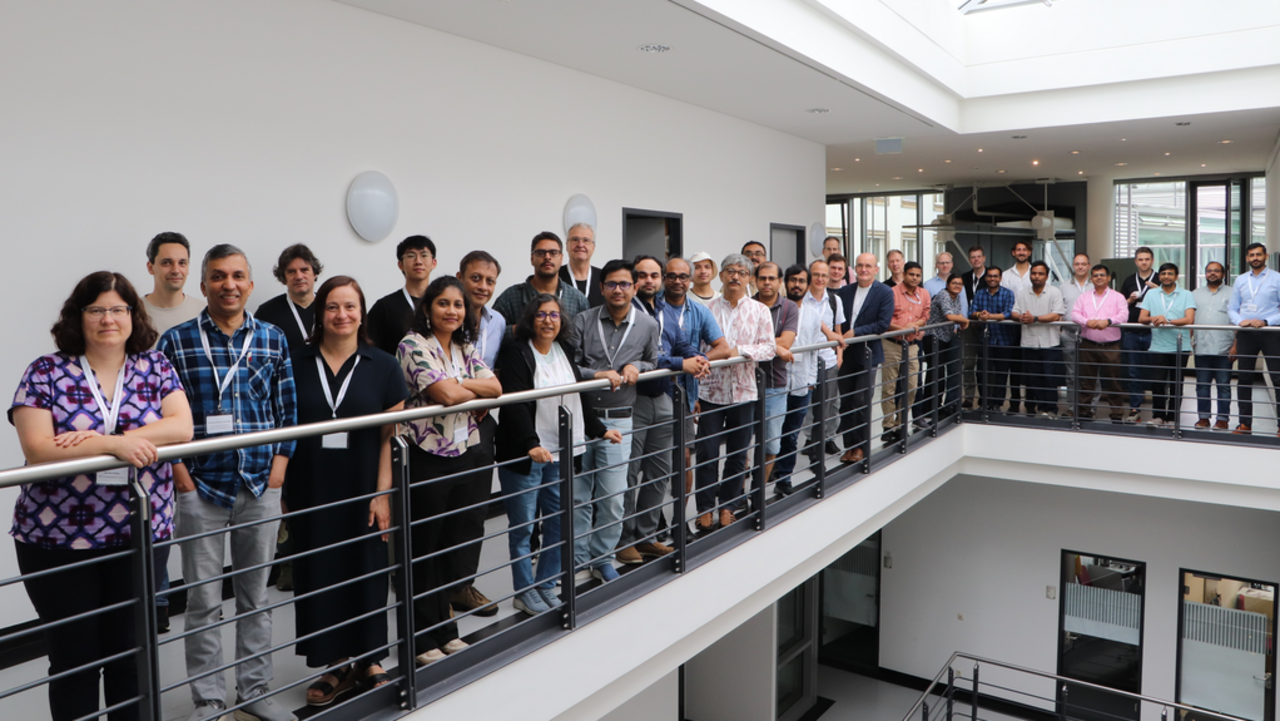

This event is sponsored by the Indo-German Science and Technology Centre (IGSTC) through their Workshop Programme


